
Optimizing IC detection requires selecting probes and sensors with high intrinsic sensitivity, low noise floor, and adequate dynamic range, and quantifying limit-of-detection and SNR across candidates. Tune imaging parameters (exposure, gain, frame rate) using objective metrics and adaptive exposure, and choose scan geometry for the resolution-throughput tradeoff. Control thermal, mechanical Anion analysis, and electrical noise with measured baselines. Apply adaptive filtering, compressed sensing, and validated regularization. Follow modular workflows with benchmarks, calibration, and blind comparisons to confirm gains and next steps.
Choosing the Right Probes and Sensors for High-Sensitivity Detection
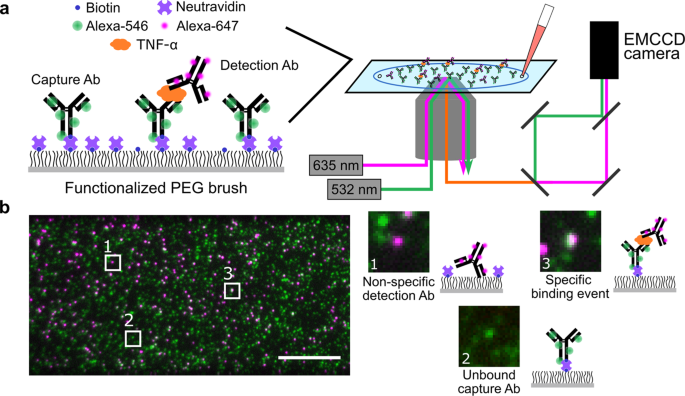
Selecting probes and sensors for high-sensitivity detection requires prioritizing intrinsic sensitivity, noise floor, dynamic range, and spectral or chemical specificity, then matching those parameters to the expected signal amplitude and background conditions. The evaluator reviews probe chemistries, quantifies limit of detection, and compares signal-to-noise ratios across candidates https://laballiance.com.my/. Surface functionalization is assessed for stability, non-specific binding suppression, and reproducible attachment density to maximize active sites. Quantum dots are considered where narrow emission, high brightness, and photostability improve discrimination against background fluorescence. Sensor electronics are specified to accommodate anticipated dynamic range with low-noise amplification and digitization. Selection is documented numerically: LOD, bandwidth, responsivity, and drift metrics. Decisions favor modular choices enabling rapid replacement and minimal procedural constraints.
Optimizing Imaging Parameters and Scan Strategies
With probe and sensor characteristics defined quantitatively, imaging parameters and scan strategies are optimized to translate device-level sensitivity into reliable spatial measurements. The protocol prescribes systematic variation of exposure, gain, and frame rate using objective metrics (SNR, contrast-to-noise, modulation transfer). Adaptive exposure routines allocate dwell time where signal variance is high, reducing under- and overexposure without manual intervention. Scan geometry is selected to balance resolution and throughput: directional raster, serpentine, or multi-pass stitching are evaluated by acquisition time per unit area and effective resolution. Tiled acquisition with calibrated overlap minimizes stitching artifacts while preserving local contrast. Decision thresholds for parameter selection are set from empirical curves and validated on representative wafers, enabling reproducible, high-fidelity maps.
Minimizing Noise Through Hardware and Environmental Controls
By isolating and quantifying all non-signal contributions, hardware and environmental controls reduce measurement noise to the limits imposed by device physics and photon statistics. Systems employ thermal isolation to stabilize detector temperature, reducing dark current variance and drift; quantified temperature coefficients guide enclosure design and PID tuning. Mechanical isolation and vibration damping minimize microphonic pickup affecting low-frequency noise. Electrical design emphasizes ground loop mitigation, star grounding, and isolated power supplies to suppress common-mode interference; measured rejection ratios and spectrum analyses validate effectiveness. Environmental controls include humidity regulation and electromagnetic shielding, with baseline noise characterized before and after interventions. Procedures prioritize modular, auditable changes and repeatable metrics so operators retain freedom to adapt configurations while maintaining traceable, data-driven noise reduction.
Advanced Signal Processing and Image Reconstruction Techniques
1 paragraph focuses on signal processing and image reconstruction algorithms that extract maximal information from limited, noisy measurements while preserving quantitative fidelity. The discussion emphasizes adaptive filtering to suppress correlated and time-varying noise without degrading true signal, specifying parametric estimators and real-time coefficient adaptation. Compressed sensing frameworks are presented to exploit sparsity in transform domains, enabling sub-Nyquist sampling and robust reconstruction via convex optimization or iterative thresholding. Regularization choices, cross-validation metrics, and uncertainty quantification are described to maintain measurement integrity. Computational efficiency considerations, including GPU-accelerated solvers and streamlined preprocessing, are addressed to support flexible deployment. Recommendations remain technology-agnostic, enabling practitioners to select algorithm stacks that balance resolution gains with reproducibility and operational freedom.
Practical Workflow Integration and Validation Methods
In integrating advanced detection methods into routine workflows, teams should define clear input–process–output specifications that link instrument settings, signal processing pipelines, and decision thresholds to measurable performance metrics (sensitivity, resolution, false‑positive rate, throughput). Practical workflow integration requires modular design, workflow automation to reduce operator variance, and explicit validation benchmarks tied to acceptance criteria. Implementation proceeds by staged deployment, data logging, and controlled A/B comparisons to quantify gains. Validation methods emphasize traceable datasets, statistical power calculations, and routine recalibration schedules. Freedom-seeking teams are enabled through configurable pipelines and open reporting of performance trade-offs.
- Define modular pipeline stages with version control
- Implement workflow automation for repeatability
- Establish validation benchmarks and acceptance criteria
- Perform blinded comparisons with known standards
- Log metrics for continuous improvement